Bedroom layout · Ergonomics · Furniture planning
Bed Stand Compatibility: Planning Around Platform Bed Frames
A bedside stand is a small piece of furniture with a demanding job: keeping everyday essentials close without narrowing the path through the room. When a platform bed or adjustable base changes the height and shape of the sleep setup, a little measuring can make the difference between convenient reach and an awkward stretch.
Published October 9, 2026
The bedside stand is part of the sleep system
In a bedroom, the bed often sets the room’s visual center, but the bedside stand sets the terms of many ordinary moments. It holds a glass of water, a book, a lamp, glasses, a phone, or the remote that adjusts the bed. Its usefulness depends not only on what it can store, but on where it sits in relation to the mattress, the frame, and the person reaching for it.
That relationship can shift when a platform bed frame replaces a taller foundation, when a thicker mattress is introduced, or when an adjustable base raises the head and foot of the bed. A stand that once felt perfectly placed may become too low, too high, or difficult to reach. A drawer may strike a wall or bed rail when opened. A narrow route on one side may become a bottleneck on both.
The answer is not to assume that a particular bed style requires a particular bedside table. Platform frames vary in height, construction, and clearance, just as mattresses vary in thickness. Instead, think of the bed stand as one part of a coordinated bedroom layout. Measure the finished bed, identify how you use the space, and test access before settling on a position.
Start with the finished bed height
“Platform bed” describes a kind of support, not a guaranteed height. Some frames sit low to the floor, while others have taller legs, a deeper base, or a substantial headboard and rail. The mattress adds another variable. To understand how a stand will meet the bed, measure the sleep surface as it is actually assembled—not just the frame listed in a product description.
Measure from the floor to the top of the mattress. If you use a mattress topper, include it. If bedding is thick or pillow-top construction makes the edge feel higher, note that too. Then measure the stand from the floor to its usable top surface. For a stand with a raised lip, tray, or thick top, record both the overall height and the height of the flat area where you expect to place items.
A helpful starting point is to have the stand’s top close to the height of the mattress surface, or slightly below it. This often makes a book or glass easy to reach without leaning far. It is a guide rather than a strict rule: body proportions, preferred sleeping position, mattress softness, and the stand’s shape all matter. A person sitting upright against pillows reaches differently from someone lying flat, and a soft mattress edge may compress when someone sits on it.
Try the movement you expect to make. Sit on the edge of the bed, lie in your usual position, and reach for an imaginary item on the stand. Your shoulder should not need to lift sharply, and your torso should not have to twist or slide toward the table. If you share the bed, test access from each side. A comfortable reach for one sleeper may be inconvenient for the other.
- Measure the assembled bed: include the frame, mattress, and any topper.
- Measure the stand: use the actual surface where objects will sit.
- Test the reach: check access while sitting and while lying in a usual sleep position.
- Repeat after changes: new bedding or a changed base height can alter the relationship.
Allow for adjustable movement
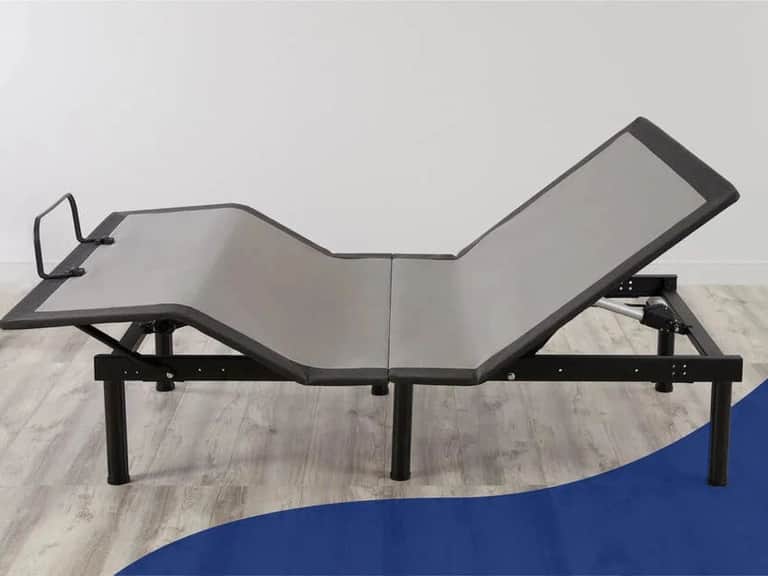
A fixed platform frame stays in one position, but an adjustable base changes the geometry of the bed. As the head or foot section rises, the mattress bends and moves. Depending on the base design, the bed may also shift in relation to the wall or headboard. A bedside stand that is comfortably close when the bed is flat may be less accessible in a reading position.
Before placing a stand, operate the adjustable base through the positions you use most. Watch the corners and sides of the mattress as they articulate. Check whether the mattress edge approaches the stand, pulls away from it, or moves over an area where a hand might otherwise reach. Keep the stand outside the base’s moving path, and do not let a table, lamp cord, or other object interfere with the mechanism.
Some adjustable bases are designed to move in a way that helps keep the sleeper near a nightstand; others may have different movement patterns. Do not infer clearance from the base’s appearance alone. Follow the manufacturer’s installation and safety guidance, and check the intended position in the room. For example, the Adjustable Base 2023 offers head-and-foot positioning and can be installed in different bed configurations. A setup that includes an adjustable base should be assessed with the base operating, not just with the mattress at rest.
Think about the stand’s contents during movement as well. A lamp with a rigid shade, a tall carafe, or a stack of objects near the edge may be more vulnerable to a bump than a low, stable item. Place breakable or heavy objects away from edges, and route cords so they cannot snag or become trapped as the bed moves. If a remote is part of the nightly routine, give it a reliable home that remains reachable in the positions you actually use.
Measure the footprint, not just the tabletop
Height determines how the stand meets the bed; footprint determines how the room works around it. A broad table can crowd a narrow walkway even when its top is at an ideal level. Conversely, a compact stand may leave ample floor space but provide too little room for a lamp and the objects used each night.
Mark the proposed footprint on the floor using paper, painter’s tape, or folded newspaper. Include the stand’s full width and depth, not merely the visible top. If it has a drawer, mark the area needed to pull it open. If it has a cabinet door, account for the swing. Test the route from the bedroom entrance to the bed, and check whether the stand obstructs access to a closet, radiator, outlet, or window covering.
Clearance is not only a matter of walking space. A nightstand pushed hard against a bed rail may make it difficult to change sheets, reach an electrical outlet, or clean the floor. A small gap can also prevent rubbing between surfaces, though the right spacing depends on the furniture and room. In compact bedrooms, a narrow table or wall-mounted shelf might preserve circulation, but any wall-mounted option should be installed securely and placed where it will not interfere with the bed’s motion.
Consider the location of outlets before deciding where the stand belongs. A lamp cord should reach without stretching across a walking path or passing under a moving component. Charging cables should not hang where they can be pulled or caught. If the outlet is behind the bed, plan the cord route before the furniture is in place; it is much easier to adjust the layout while the floor is still clear.
Choose a shape that supports daily use
Bedside furniture is most effective when its form suits the objects and habits it serves. A flat-top table is easy to approach and offers open access, but items remain visible. Drawers keep smaller belongings contained; shelves can make books or baskets easy to reach. A cabinet hides objects but needs room for its door. The choice is practical as well as aesthetic.
Check the underside and side profile, not only the top. A table with a broad apron or low shelf may conflict with a bed rail, while a legged design may slide into a tighter position. The bed stand should not need to be forced against the frame to look centered. A small, deliberate gap can make cleaning and movement easier, particularly around adjustable equipment.
Material and finish also influence how the furniture behaves over time. A sturdy table is less likely to feel unstable when someone reaches for an item, while a light, top-heavy stand can be easier to tip. Consider whether the floor is level and whether the feet sit securely. On wood or other easily marked flooring, suitable protective pads can help prevent scratches, provided they do not make the furniture unstable.
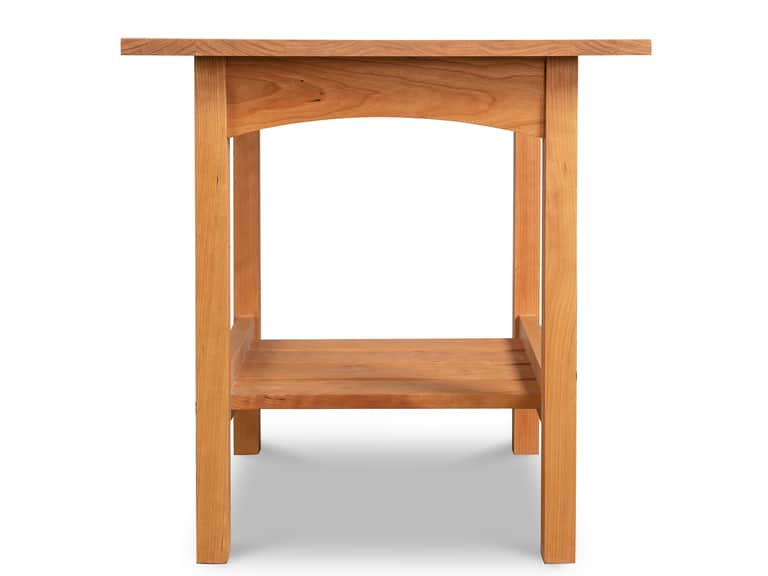
A traditional bedside table can work in a contemporary room when its dimensions are right. The Burlington Shaker Lamp Table, handcrafted in solid cherry, maple, or walnut with a natural oil finish, is an example of a lamp table whose role can extend to bedside use. Before choosing any table for that purpose, compare its actual dimensions with the mattress height and the available floor area. Style is easiest to appreciate when the furniture can be reached, opened, and moved around comfortably.
Plan around two sleepers
In a shared bedroom, the bed stand is part of two separate routines. One sleeper may read before bed; the other may need room for medication, glasses, or a device. A split adjustable base can allow each side to move independently, making it especially important to check the clearance on both sides rather than treating the bed as one static object.
Begin by asking what each person needs within reach and what can be stored elsewhere. Two identical stands are not always necessary, and matching furniture does not guarantee matching usefulness. One side might benefit from drawers, while the other needs a clear surface or more space for a lamp. The aim is functional balance: both sleepers should have safe access to the objects they use without crowding the route around the bed.
When a room is too narrow for a full-size stand on each side, explore smaller footprints or a different storage arrangement. Keep frequently used items close enough to reach without an awkward twist, but avoid creating piles that reduce usable surface area. Where medical equipment or mobility aids are part of a bedroom, plan clear access for them and consult relevant professional guidance about safe placement.
Make the room work as a whole
Bedroom layout is a sequence of clearances. A bed may fit within the room’s dimensions yet still leave too little space to open a stand drawer or pass comfortably. The position of doors, windows, heating equipment, closets, and electrical outlets shapes the usable area. Measure those fixed features along with the bed and furniture, then draw a simple plan before moving heavy items.
Leave a clear route around the bed where the room allows. The exact space needed depends on the household, the furniture, and how the room is used, so test the layout rather than relying on a single universal measurement. Consider whether someone needs to walk around the bed at night, whether bedding can be changed without moving the stand, and whether drawers remain accessible when the room’s doors are open.
Lighting deserves a place in the plan. A lamp should illuminate reading without taking over the entire tabletop, and its switch should be reachable from the bed. A wall light can free surface area, but its placement must account for sitting height and the movement of any adjustable base. Avoid positioning a shade or bulb where it can be struck by pillows, bedding, or a raised mattress.
Visual balance matters, too, but it should follow function. A centered bed with a stand on each side can create a calm, ordered arrangement. In a small room, however, an asymmetrical layout may preserve more usable space. A narrow stand on one side and a wall shelf on the other can be a thoughtful solution if both are secure, accessible, and clear of moving parts.
A practical measuring sequence
A few minutes with a tape measure can prevent repeated rearranging. Work through the room in a consistent order, recording each dimension. If possible, measure the furniture at home rather than relying only on a generic label such as “nightstand” or “platform bed.” Product names describe categories; they do not tell you how a specific piece will fit your room.
- Record the bed’s full dimensions. Note width and length, including any frame edges that extend beyond the mattress.
- Measure the finished bed height. Measure floor to mattress top with all intended bedding layers in place.
- Measure the stand. Record height, width, depth, and the reach needed to open drawers or doors.
- Map circulation. Note the route past the bed and the clearance near doors, closets, and other furniture.
- Test adjustable positions. If the bed moves, check the full range you intend to use and keep furniture outside its path.
- Check cords and outlets. Plan safe routes for lamps, chargers, and remotes before final placement.
- Live with the layout briefly. Use the setup for several evenings and adjust if reaching or movement feels inconvenient.
Measurements are useful, but a floor plan cannot capture every sensation. After arranging the room, use it in ordinary conditions: approach the bed in low light, sit down, lie back, reach for a book, and open the drawers you expect to use. That simple rehearsal reveals small problems—an awkward corner, a blocked switch, a cable underfoot—that may not appear on paper.
Common planning mistakes to avoid
Choosing by appearance alone. A table can suit the finish of a frame and still be too tall, too low, or too deep. Compare measurements before deciding.
Measuring the frame without the mattress. The frame’s published height does not tell you the final height of the sleep surface. Include the mattress and topper.
Assuming the bed stays still. An adjustable base may change the position and shape of the mattress. Check clearances while it moves.
Forgetting drawer and door swing. A stand may fit in its closed position but become unusable when storage is opened. Include that space in the floor plan.
Overfilling the tabletop. Crowded surfaces make everyday items harder to find and leave less room for a lamp or remote. Keep the most-used objects accessible and store occasional items elsewhere.
Ignoring how the room is maintained. A stand that cannot be moved enough to clean around or change bedding can become a lasting inconvenience. Leave practical working space where possible.
A small piece of furniture, a more considered room
Compatibility between a bed stand and platform bed frames is not a matter of finding a standard height or matching set. It is a matter of observing how the bed is built, how high the finished mattress sits, and how the room is used. Once those details are clear, the choice becomes more straightforward: select a stand that supports comfortable reach, opens without obstruction, and leaves the path around the bed usable.
For a fixed platform bed, the key checks are height, footprint, and storage clearance. For an adjustable setup, add the range of movement, cord routing, and access in more than one position. For a shared room, test both sides and consider each sleeper’s routine. These practical steps can help prevent a bedside table from becoming an obstacle—or a surface that is always just out of reach.
The best bedroom arrangement is rarely the one with the most furniture. It is the one in which essential objects have a sensible place, the route through the room remains clear, and every component works with the rest. Measure first, test the setup, and let comfort—not a label or a matching finish—guide the final placement.
Bed stand compatibility checklist
- The bed’s finished height has been measured from floor to mattress surface.
- The stand’s top is comfortable to reach from sitting and lying positions.
- Drawers and cabinet doors can open without hitting the bed or blocking the walkway.
- The stand remains outside the path of any adjustable base or moving mattress.
- Lamps, chargers, and remotes can be used without cords crossing a walking route.
- There is practical access to both sides of the bed and nearby doors or storage.
- The arrangement has been tested during ordinary evening and morning routines.